






Repair guide
The 90-Minute Indoor Project for a 105° Sarasota Week: Mounting That New TV
Got it — we will get back to you.
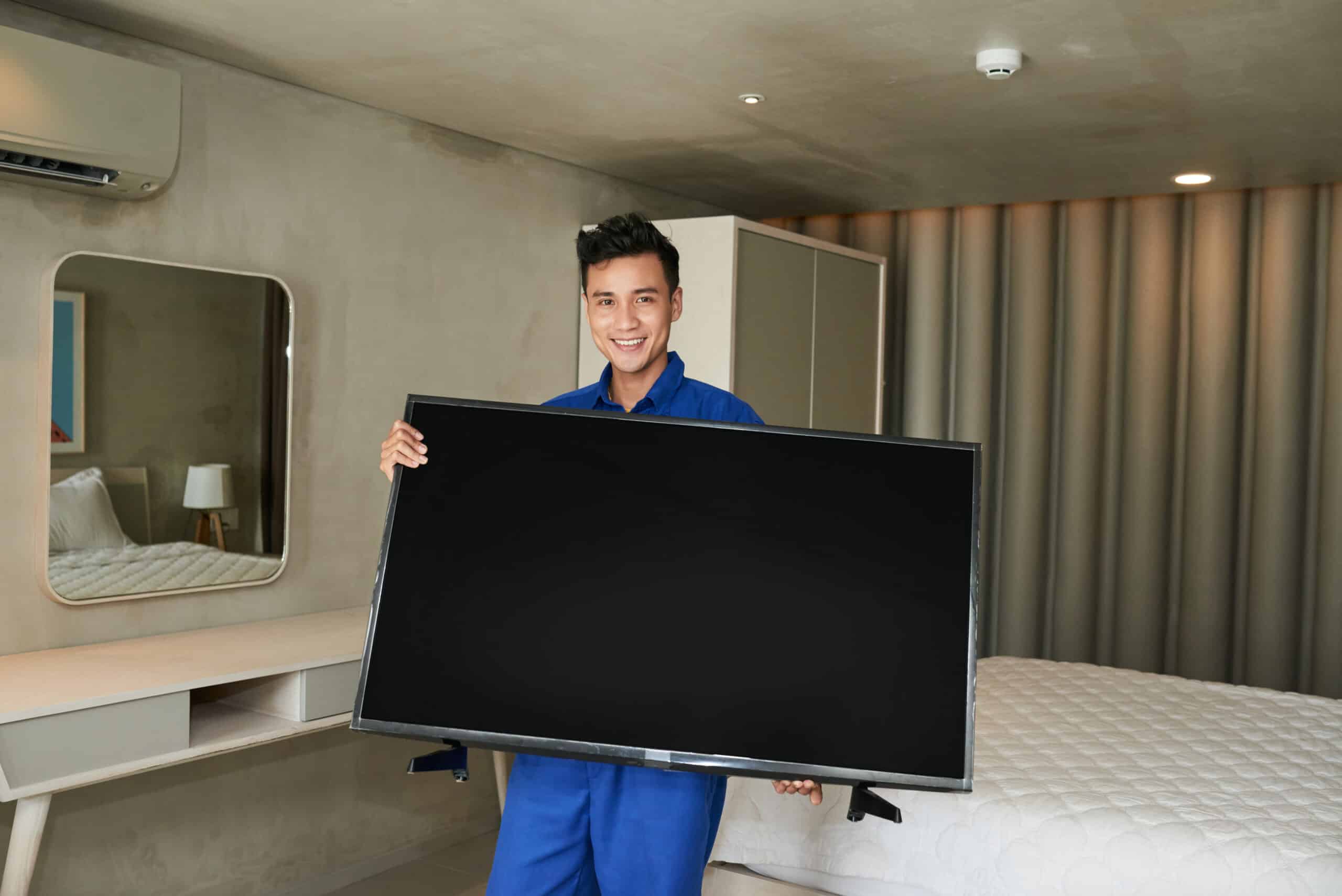
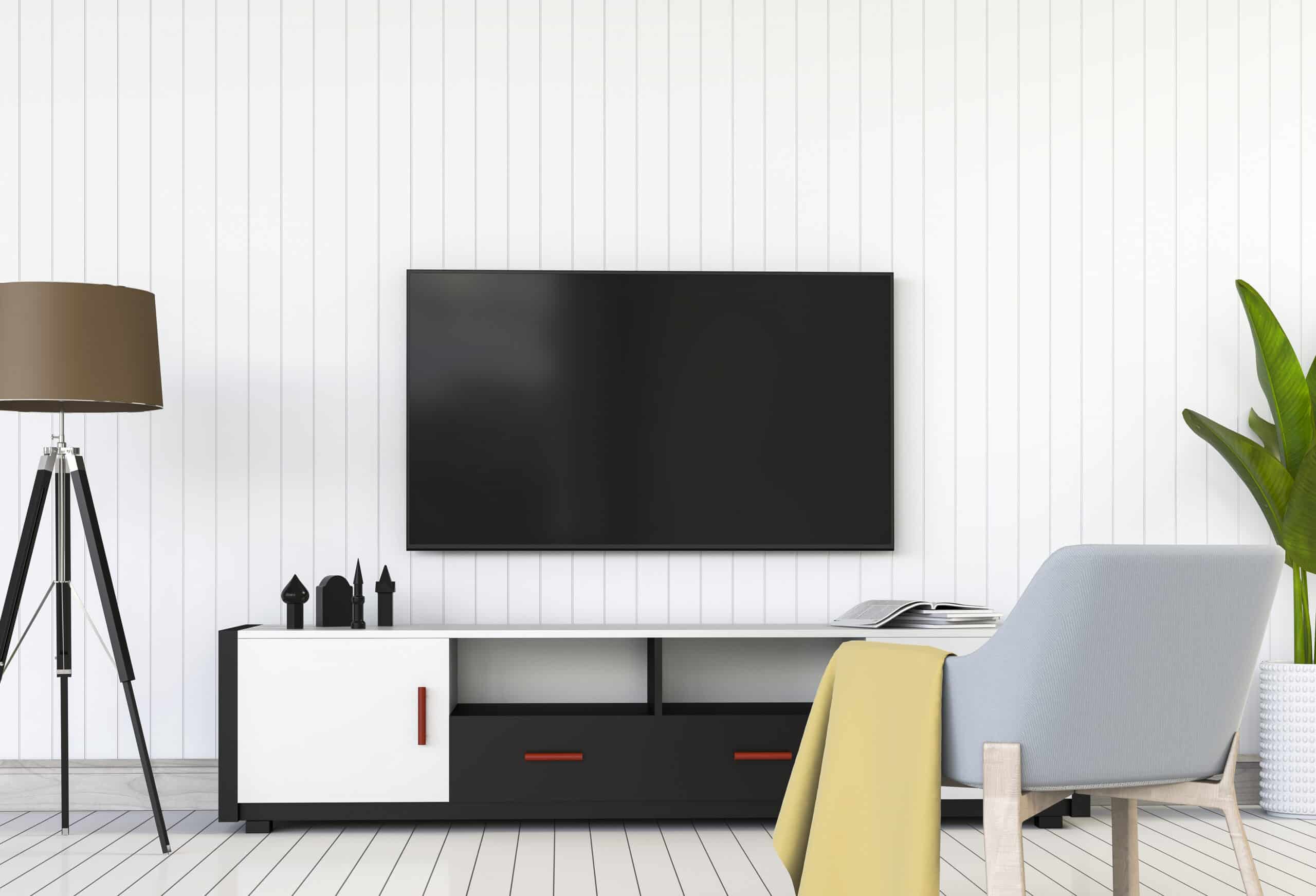
It’s 105° outside, the heat index is pushing 110°, and there’s a 65″ TV still leaning against your living room wall in the box you carried in from the July 4th sale. Going outside to work on the yard is off the table this week. So let’s knock out the indoor job you’ve been putting off.
Why this week is the week
A heat advisory is running for Sarasota, Manatee, and Charlotte counties through July 9, with heat index values between 103° and 110° during the hottest part of each day. That’s a stay-inside stretch. Mounting a TV is exactly the kind of clean, cool, indoor project that fits a week like this — and it’s one where doing it right actually matters.
The part most people get wrong: studs vs. drywall anchors
Here’s the thing that trips up a lot of DIY TV mounts. Drywall anchors feel sturdy when you screw them in. But the good ones are rated for maybe 40–50 lbs of pull-out force. A 65″ TV runs 50–70 lbs, and once it’s on a full-motion arm that swings out, the leverage multiplies the load. Add a kid leaning on it or a dog bumping the arm, and anchors let go.
Local pros always mount to studs. Drywall anchors are fine for a picture frame. Not for a 60-pound TV your kids are going to lean on.
In most Florida homes, studs sit 16″ on center. We find two of them, drive lag bolts into the framing, and that gives you 400+ lbs of rated capacity holding up a 60-lb TV. That’s the margin you want on a wall your family walks past every day.
What the job actually looks like
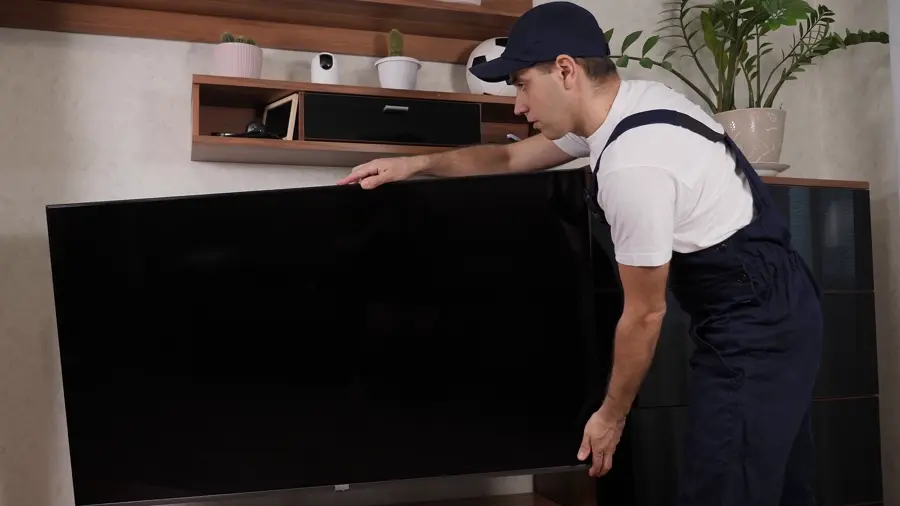
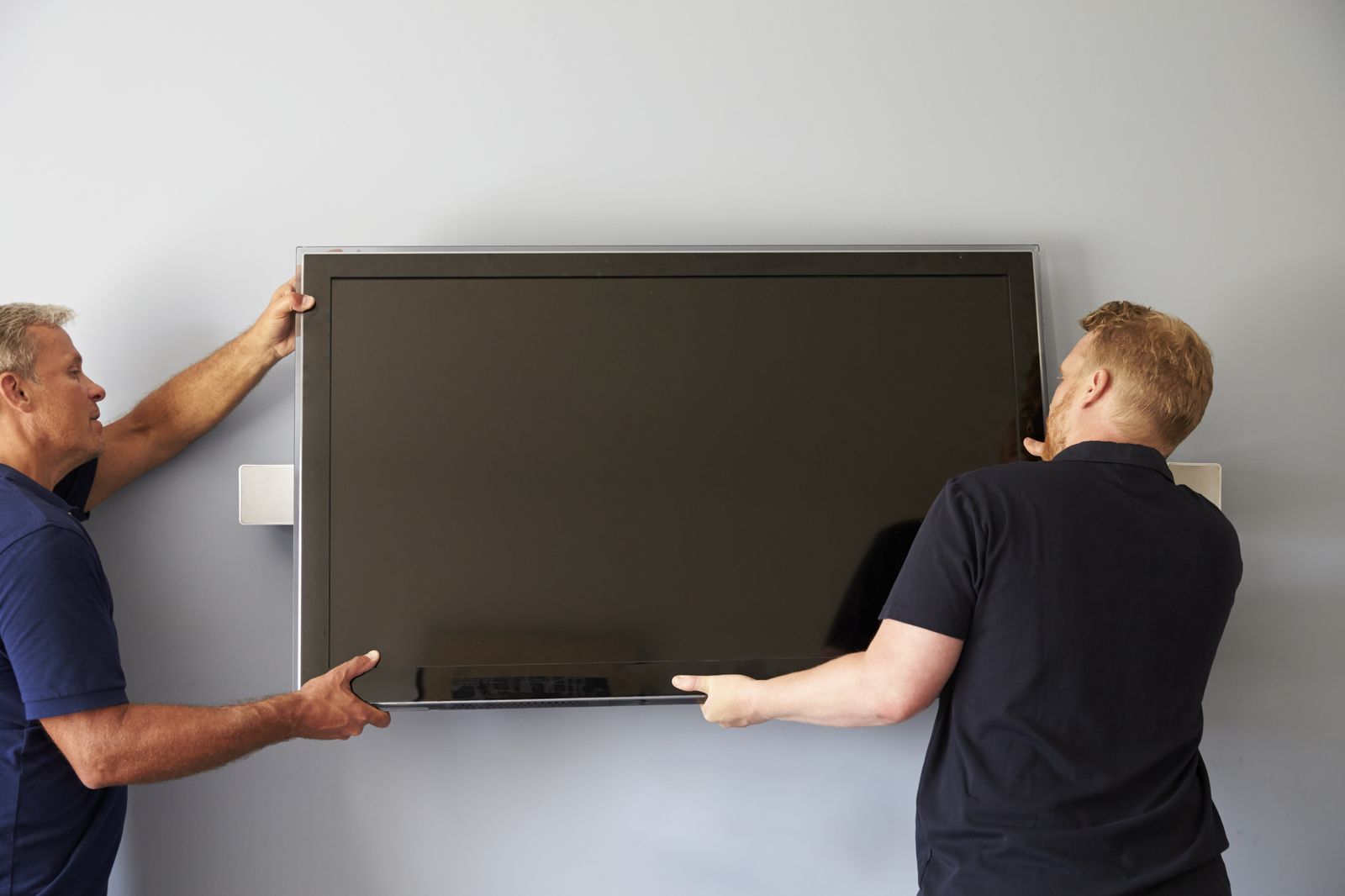
A standard 65″ mount with cable management takes us about 90 minutes:
- Locate and confirm the studs
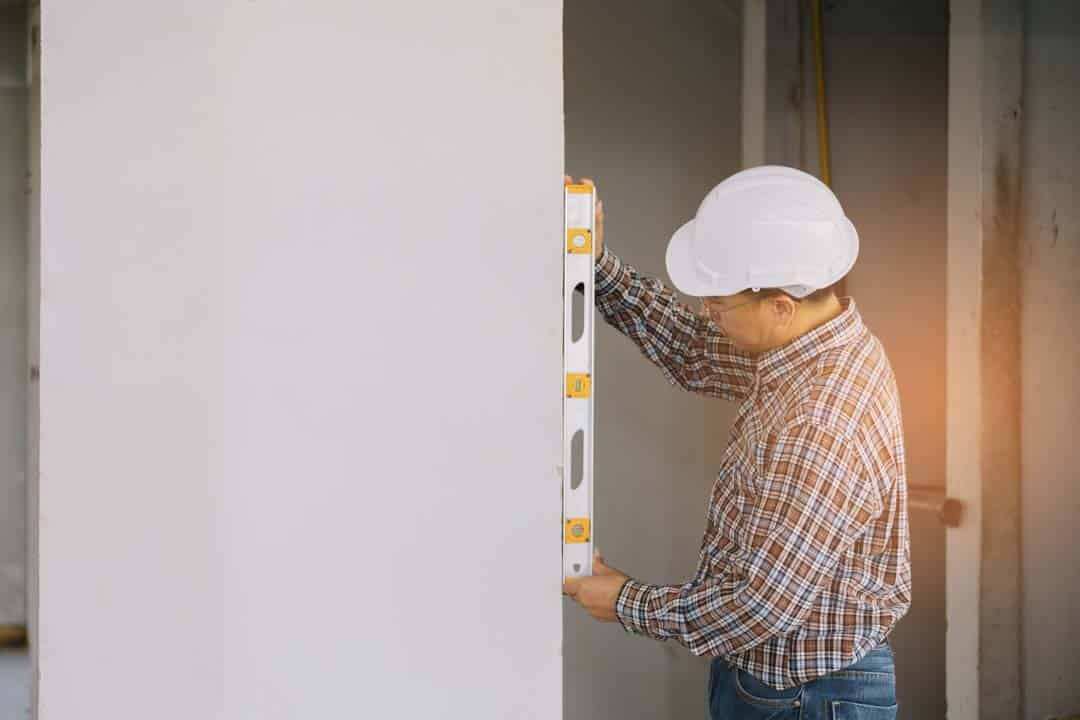
- Level and secure the bracket with lag bolts
- Hang and balance the TV so it sits true
- Run a surface-mounted cord cover to hide the cables
Scope depends on the TV size, the mount type, the wall, and the length of the cord cover run.
The mount and the cable cover
You can supply your own mount and the pro will install it — plenty of customers do. If you’d rather the pro bring one, a solid full-motion pick is the SANUS OLF22-B2. It fits 42″–90″ TVs, holds up to 125 lbs, extends 22″ off the wall, and retracts to 2.5″ when you push it flat. If you only need to angle the screen down and don’t care about swinging it out, a tilt-only bracket like the Cheetah APTMM2B is the lower-cost option and handles up to 165 lbs — just know it doesn’t pull away from the wall.
For the cables, a common pick is the Legrand Wiremold CordMate II Kit (CMK50, Home Depot item 202059072). It’s 10 linear feet, holds three cables, and it’s paintable — so once it’s on the wall and painted to match, you barely see it.
Where our scope ends — honestly
This is a fixture-only job. Local pros mount the TV and install a surface-mounted cord cover raceway on the wall. That’s the clean, code-compliant way to hide cords without opening up your drywall.
If you want the cables run inside the wall — a recessed power outlet behind the TV, no visible raceway at all — that involves in-wall electrical work. When a customer wants it, we refer that piece to a licensed electrician. We’d rather tell you that straight than pretend it’s a handyman task.
One trip, more than one thing crossed off
Since we’re already there with the tools out, the TV mount doesn’t have to be the only thing. If you’ve got a wobbly shelf to re-hang, a light fixture to swap, or a spot of drywall to patch nearby, we can knock those out on the same visit. That’s the difference between a TV-only installer and a handyman — you get the whole to-do list handled in one stop.
Ready when you are
If that TV’s been sitting on the floor since the sale, this is the week to get it up on the wall — mounted to studs, cables hidden, done in about 90 minutes.
Send photos for a quote at handys.now. We respond, and once you approve the bid we’ll get on the schedule.
What sets the price
Contractors set their own prices, and prices vary. The size of the job, the materials you pick, access, the condition of what is there now, and any HOA or permit needs set the scope and the price. The pro quotes after seeing photos or the job.
A vetted local pro looks at the job and quotes before work starts.